Rethinking Case Assignments to Keep Code Enforcement Moving
When case volume is high and resources are limited, even small process improvements can make a measurable difference.
For many departments, assigning new cases is an informal process that doesn’t give much cause for consideration. Usually the case goes to whoever is available or who is up next in the rotation. While this seems logical on the surface, it doesn’t always create evenly distributed workloads in the long run.
When code teams lack an established framework for assigning cases, workloads can become uneven, leading to delays in response time and case resolution – not to mention overwhelmed officers.
Establishing a clear, intentional approach to case assignments is an often overlooked but simple way to improve department efficiency and better balance workloads.
Why Case Assignments Matter More Than You Think
Departments operate most effectively when work is distributed evenly. While no method guarantees perfect balance every day, a case assignment framework creates a better foundation for evenly distributed work.
Instead of reacting to incoming complaints and giving the case to the first available or geographically closest officer, a case assignment framework allows your team to leverage a repeatable system to balance the work and better identify where bottlenecks are happening and how to remove them.
Types of Case Assignment Models
In Comcate’s eBook Overhauling Efficiency in Code Enforcement, we take a look at four different case assignment models that code teams can use to create a framework for distributing workload.
Round Robin – Rotate assignments through officers in a consistent cycle, regardless of current caseload.
Geographic – Assign officers by ward, district, beat, or region to reduce drive time and strengthen community familiarity / strengthen individual presence in specific communities/neighborhoods.
Function – Divide responsibilities by stage of the enforcement process (initial inspections, follow-ups, abatements, etc.) to create an “assembly line” workflow.
Violation – Allow officers to focus on specific categories of violations to build expertise and develop relevant external partnerships.
Each approach has its tradeoffs. For example, geographic assignments improve efficiency in the field but may require overflow plans if certain areas generate more cases than others. Function-based models can increase speed by allowing officers to specialize and develop repeatable efficiencies, but they require strong documentation and communication in order for the next officer to effectively pick up where the previous officer left off.
Small Adjustments, Big Impact
When you’re managing high case volume, even minor time savings per case add up quickly. A streamlined case assignment structure can reduce “think” work, limit decision fatigue, and help supervisors quickly spot workload imbalances before they become major issues. Over time, even modest time savings per case can dramatically increase overall case capacity.
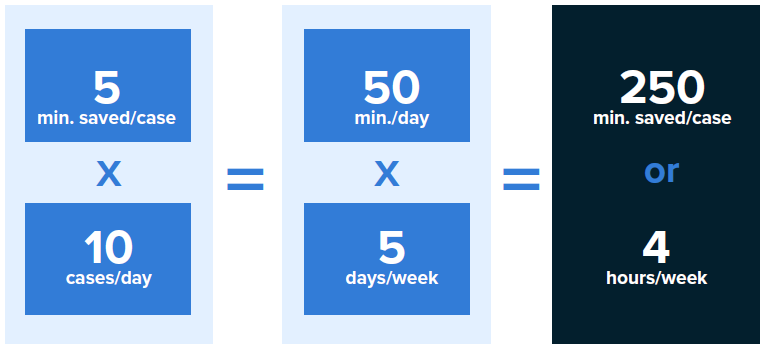
Minutes saved per case can add up over time.
It’s important to note that case assignment models are just frameworks, not perfect solutions. While they can help distribute work evenly, they won’t create perfect balance everyday, and you’ll still want to create a system of “checks and balances” – in this case, creating regular check-in points that allow you to balance workloads as needed. Consider a brief daily stand-up at the start of the workday, before officers hit the field, to check in on case loads and adjust accordingly.
High Case Volume and Limited Resources?
Helping code teams to leverage existing resources to get more done in the same amount of time is what we do best at Comcate. For more areas of focus where small operational changes can add up to big time savings, download a copy of our eBook Overhauling Efficiency in Code Enforcement.
Schedule a Meeting with Comcate Today!
Learn how Comcate can help make government delivery simple, and offer a modern digital experience to help you increase transparency, efficiency, and performance across your departments. If you have any questions about implementing our software, please fill out the form below or call us directly at (415) 632-1248.
RECENT BLOG POSTS